The mobile gaming industry has changed dramatically over the past few years.
User acquisition costs continue rising. Competition is more aggressive than ever. Players expect premium experiences, and developers are under increasing pressure to generate more revenue without damaging retention.
For many studios, this creates one of the biggest challenges in mobile gaming today:
How do you increase ARPDAU without ruining the player experience?
The answer is not more ads.
The answer is smarter monetization infrastructure.
Modern mobile games are shifting toward rewarded engagement systems, offerwall monetization, real-time analytics, and SDK-based infrastructure platforms designed to maximize revenue while protecting gameplay quality.
This is the future of mobile monetization.
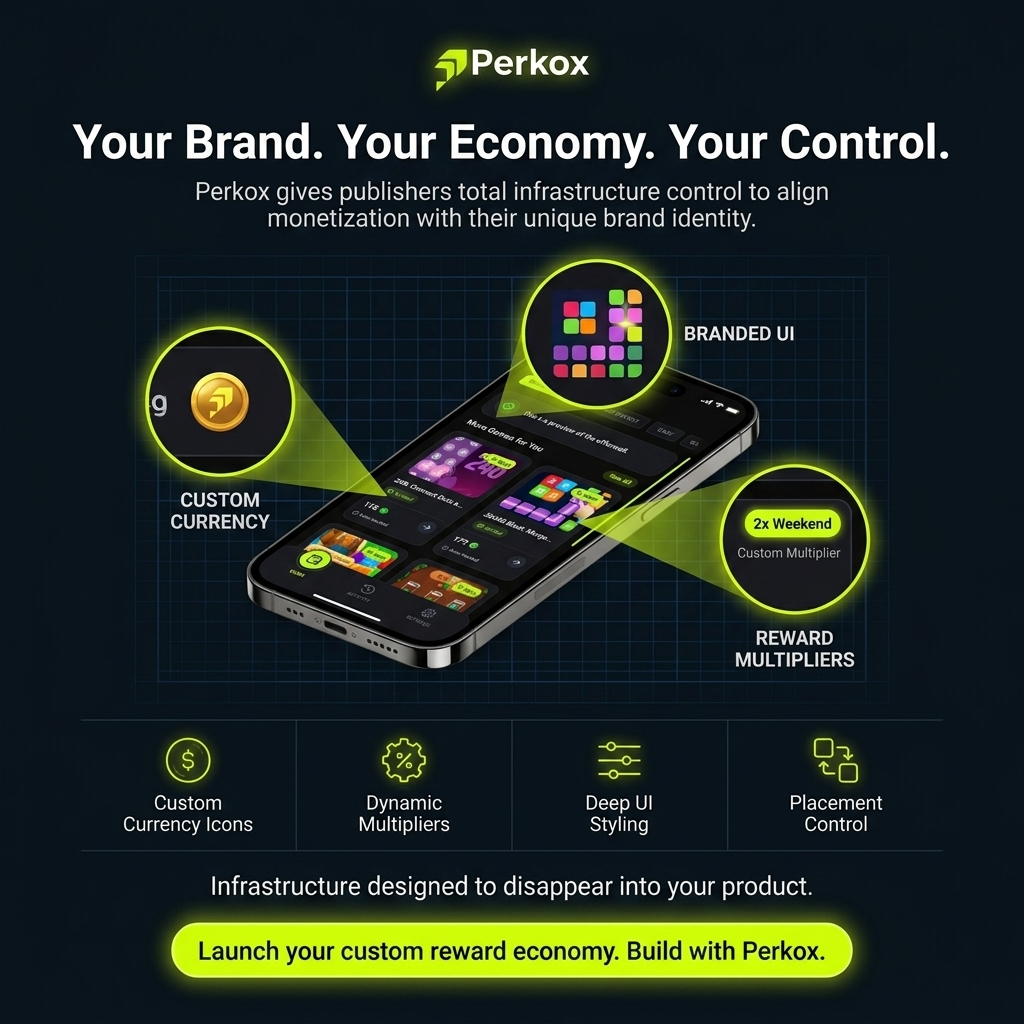
And it is exactly why platforms like Perkox are gaining attention among mobile developers.
Why Traditional Mobile Ads Are Failing
For years, mobile monetization relied heavily on:
- aggressive interstitials
- forced video ads
- banner spam
- repetitive ad experiences
While these methods generated short-term revenue, they often came at the expense of:
- player retention
- session length
- app ratings
- long-term LTV
Modern players are no longer willing to tolerate poor monetization experiences.
In today’s gaming ecosystem, user experience directly impacts monetization performance.
If players become frustrated:
- retention drops
- engagement falls
- ad revenue decreases
- CPI recovery becomes harder
This is why developers are rethinking monetization completely.
The ARPDAU Challenge in Mobile Gaming
8
ARPDAU (Average Revenue Per Daily Active User) has become one of the most important KPIs in mobile gaming.
Increasing ARPDAU means:
- generating more revenue per player
- improving monetization efficiency
- maximizing engagement value
But increasing ARPDAU without hurting retention is difficult.
Many games make the mistake of:
- showing too many ads
- forcing monetization moments
- interrupting gameplay loops
- prioritizing short-term revenue
The result?
Lower retention and weaker long-term monetization.
The best-performing studios now focus on:
- optional monetization
- rewarded systems
- intelligent engagement
- player-friendly revenue models
Why Rewarded Monetization Works Better
Rewarded monetization changes the relationship between players and ads.
Instead of interrupting the experience, rewarded systems allow players to choose engagement voluntarily.
Examples include:
- reward videos
- offerwalls
- bonus currency systems
- progression rewards
- optional engagement tasks
This creates a far healthier monetization ecosystem.
Players feel:
- more in control
- less interrupted
- more rewarded
- more engaged
For developers, rewarded systems often produce:
- stronger retention
- better conversion rates
- longer sessions
- improved revenue quality
This is one reason rewarded monetization has become dominant across modern mobile games.
The Hidden Opportunity: Monetizing Non-Paying Users
One of the biggest realities in mobile gaming is:
Most users never make an in-app purchase.
In many games, over 90% of users remain non-paying players.
Traditional monetization systems struggle to extract value from these audiences without hurting UX.
Offerwall infrastructure changes that.
Modern offerwalls allow players to:
- complete optional tasks
- engage with rewarded campaigns
- unlock in-game rewards
- participate voluntarily
This creates new monetization opportunities without forcing purchases.
Platforms like Perkox are building SDK infrastructures focused specifically on this type of rewarded engagement ecosystem.
Real-Time Analytics Is the New Monetization Engine
6
Modern monetization is no longer static.
Developers now need real-time visibility into:
- eCPM
- ARPDAU
- DAU
- MAU
- conversion rates
- reward completion
- monetization performance
Without analytics, optimization becomes guesswork.
The strongest-performing SDK platforms now provide:
- real-time dashboards
- monetization insights
- AI-powered optimization
- user behavior analytics
- engagement tracking
This allows developers to optimize monetization while maintaining healthy player experiences.
SDK Infrastructure Is Replacing Traditional Ad Networks
The mobile monetization market is evolving beyond traditional ad networks.
Developers now want:
- infrastructure
- security
- analytics
- SDK ecosystems
- fraud prevention
- scalable integrations
This is why the concept of “monetization infrastructure” is becoming so important.
Instead of using disconnected monetization tools, studios are moving toward unified SDK platforms capable of handling:
- rewarded monetization
- analytics
- optimization
- engagement systems
- offerwall technology
- real-time revenue management
Platforms like Perkox are positioning themselves directly in this next-generation SDK market.
Security & Fraud Prevention Matter More Than Ever
As mobile monetization grows, fraud becomes more sophisticated.
Developers increasingly face:
- fake installs
- spoofed rewards
- SDK abuse
- event manipulation
- bot traffic
Modern SDK infrastructure must include:
- server-side verification
- anti-fraud systems
- secure reward validation
- protected APIs
- cloud-based verification layers
Security is no longer optional.
It is becoming a core requirement for serious mobile monetization systems.
The Future of Mobile Game Monetization

7
The future of monetization is not about forcing more ads.
It is about:
- improving player experience
- maximizing engagement quality
- monetizing intelligently
- optimizing revenue with analytics
- building long-term retention systems
The most successful mobile games in 2026 will combine:
- rewarded monetization
- real-time optimization
- AI-powered analytics
- SDK infrastructure
- player-first design
This is the direction the industry is moving.
And developers who adapt early will have a major advantage.
Leave a Reply